
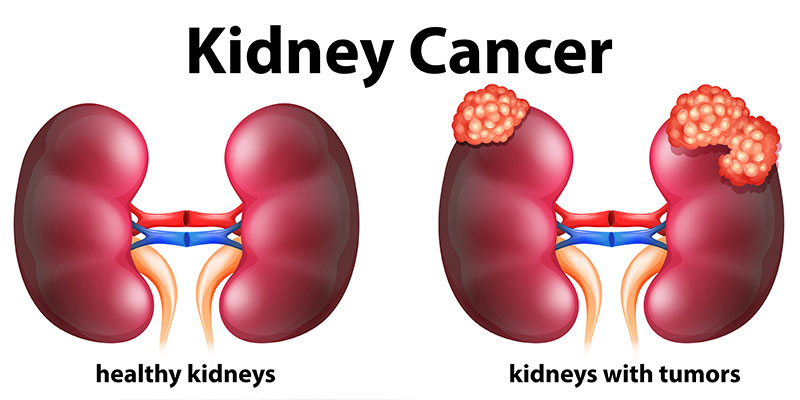
Kidney Cancer
Kidney Cancer Surgery & TreatmentIn the past, the typical treatment for kidney cancer was the removal of the entire kidney, called total nephrectomy. However for smaller tumors it is no longer necessary to remove the whole kidney. For select patients with small kidney tumor it is now possible to undergo a procedure called laparoscopic partial nephrectomy. This is a minimally invasive procedure wherein the tumor is removed in its entirety alongwith a rim of normal kidney tissue. This allows the patient to keep a sizeable portion of the affected kidney which is specially a boon for hypertensive and diabetic patients. For patients with larger kidney tumors the entire kidney is removed laproscopically.
What is kidney cancer?As with all cancers, kidney cancer and benign tumors evolve from a disruption in one or more genes in a cell’s DNA. Loss of control of normal genetic cell multiplications leads to uncontrolled mass of tissue that is a tumor.Approximately 85% of all kidney cancers are renal cell carcinoma (RCC). Transitional cell cancer (TCC) of the renal pelvis is less common accounting for about 8% of diagnosed cancers.
Symptoms of Kidney CancerKidney cancer is typically asymptomatic during much of the initial period. Individuals may notice a persistent pain in their back just below the ribs. General symptoms may include persistent fatigue, unexplained weight loss, recurrent fevers, high blood pressure (hypertension), swelling (edema) in the ankles, a feeling of poor health, and blood in the urine (hematuria).
TreatmentIt can be done by Open Laparoscopic Radical Nephrectomy & Partial Nephrectomy Surgery.
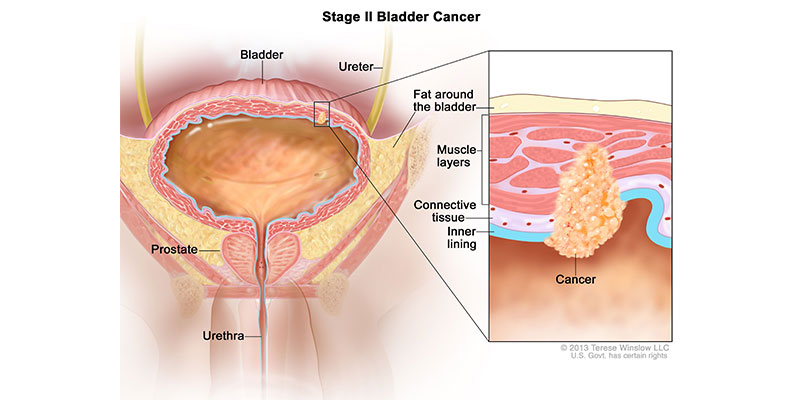
Urinary Bladder Cancers
The bladder is a hollow, flexible pouch in your pelvis. Its main job is to store urine before it leaves your body. Your kidneys make pee. Tubes called ureters carry the pee from your kidneys to your bladder. When you use the bathroom, the muscles in your bladder push the urine out through a tube called the urethra.
You get bladder cancer when cells inside of it grow out of control. Over time, a tumor forms. It can spread to nearby fat and tissue. In severe cases, it can spread to distant parts of your body, including your lymph nodes, bones, lungs, or liver.
- Chronic bladder inflammation
- Smoking
- Working around harmful chemicals
- Taking certain diabetes medications
- Prior chemo or radiation treatment
- You have to pee more often than usual
- Your urine changes color
- It hurts or burns when you pee
- You feel like you have to pee -even if your bladder’s not full
- You can’t pee, or you pee very little
It can be done by TURBT, Radical Cystectomy .
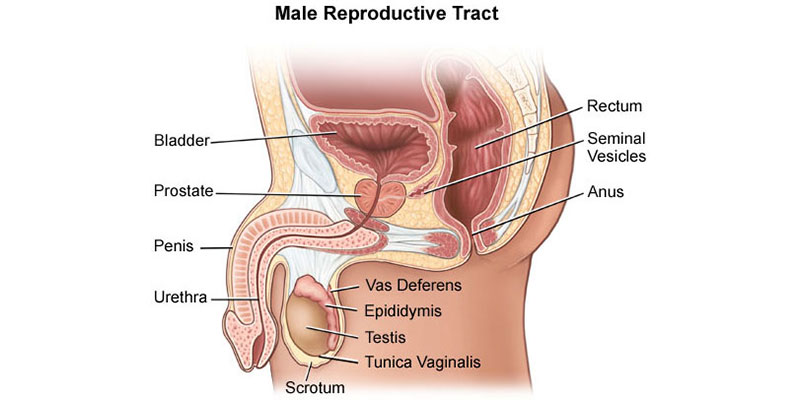
Prostate Cancer
Prostate cancer is cancer that occurs in the prostate — a small walnut-shaped gland in men that produces the seminal fluid that nourishes and transports sperm. Prostate cancer is one of the most common types of cancer in men. Usually prostate cancer grows slowly and is initially confined to the prostate gland, where it may not cause serious harm. However, while some types of prostate cancer grow slowly and may need minimal or even no treatment, other types are aggressive and can spread quickly. Prostate cancer that's detected early — when it's still confined to the prostate gland— has a better chance of successful treatment.
SymptomsProstate cancer may cause no signs or symptoms in its early stages.
Prostate cancer that's more advanced may cause signs and symptoms such as:- Trouble urinating
- Decreased force in the stream of urine
- Blood in semen
- Discomfort in the pelvic area
- Bone pain
- Erectile dysfunction
It's not clear what causes prostate cancer.
Doctors know that prostate cancer begins when some cells in your prostate become abnormal. Mutations in the abnormal cells' DNA cause the cells to grow and divide more rapidly than normal cells do. The abnormal cells continue living, when other cells would die. The accumulating abnormal cells form a tumor that can grow to invade nearby tissue. Some abnormal cells can also break off and spread (metastasize) to other parts of the body.
TreatmentIt can be done by TURP, TUIP & HOLEP Surgery.
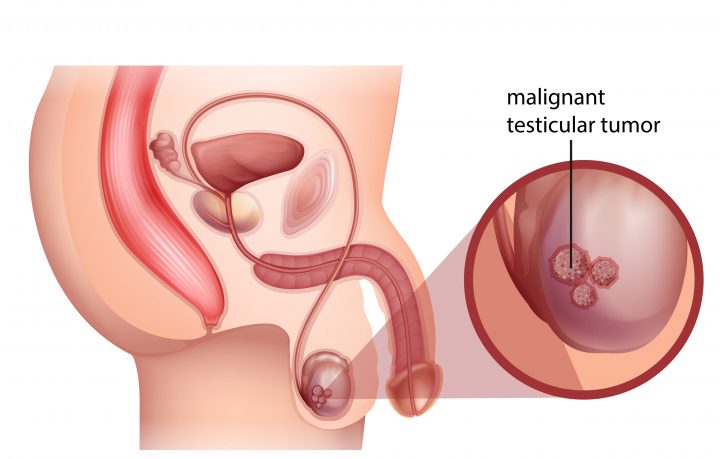
Testies Cancer
Percutaneous stone surgery is usually used for larger stones. A small hollow tube is placed directly through a patient’s back into the kidney through Testicular cancer occurs when cells that aren't normal grow out of control in the testicles (testes). It is highly curable, especially when it is found early.
The testes are the two male sex organs that make and store sperm. They are located in a pouch below the penis called the scrotum. The testes also make the hormone testosterone.
Testicular cancer is rare. But it is the most common cancer among young men.
Most testicular cancers start in cells that make sperm. These cells are called germ cells. The two main types of testicular germ cell cancers are seminomas and nonseminomas. Seminomas grow and spread slowly and respond to radiation therapy. Nonseminomas grow and spread more quickly than seminomas. There are several different types of nonseminomas.
This topic covers seminoma and nonseminoma cancer. It does not cover non-germ cell testicular cancers, such as Leydig cell tumors.
SymptomsmSigns and symptoms of testicular cancer include:
- A lump or enlargement in either testicle
- A feeling of heaviness in the scrotum
- A dull ache in the abdomen or groin
- A sudden collection of fluid in the scrotum
- Pain or discomfort in a testicle or the scrotum
- Enlargement or tenderness of the breasts
- Back pain
It's not clear what causes testicular cancer in most cases.
Doctors know that testicular cancer occurs when healthy cells in a testicle become altered. Healthy cells grow and divide in an orderly way to keep your body functioning normally. But sometimes some cells develop abnormalities, causing this growth to get out of control — these cancer cells continue dividing even when new cells aren't needed. The accumulating cells form a mass in the testicle. Nearly all testicular cancers begin in the germ cells. the cells in the testicles that produce immature sperm. What causes germ cells to become abnormal and develop into cancer isn't known.
TreatmentIt can be done by Radical Orchiectomy , Chemotherapy & Radiotherapy .
Penile Cancer
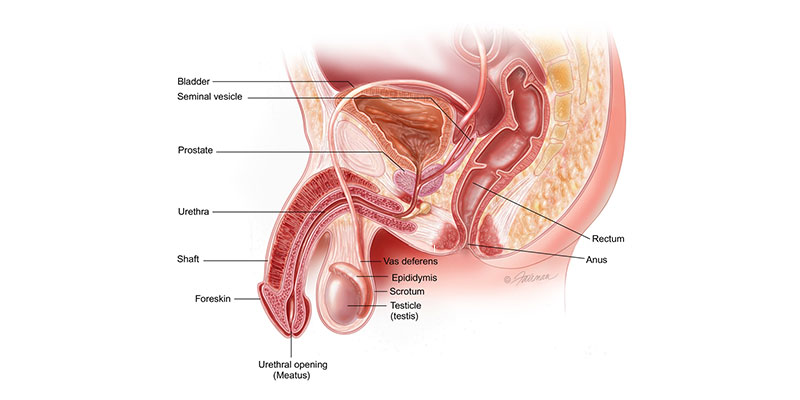
How does the Penis Normally work?The main roles of the penis are to carry urine out of the body and sperm into the woman's vagina. There are 3 tubes inside the penis. One is called the urethra. It’s hollow and carries urine from the bladder through the penis to the outside. The other 2 tubes are called the corpora cavernosa. These are soft, spongy tubes that fill with blood to make the penis stiff during an erection. The 3 tubes are wrapped together by a very tough fibrous sheath called the tunica albuginea. During sex, the stiffness of the penis makes it hard enough to push into the woman’s vagina. Then the urethra acts as a channel to carry semen into the vagina.
SymptomsThe earlier penile cancer is found, the better. If it’s found early, there is a good chance for successful treatment and a cure. If diagnosis is delayed, the disease can get worse. Treatment for more advanced cancer may be less successful and more disfiguring.
Since you see and touch your penis when you urinate, you can help spot the disease early. Men who aren’t circumcised are at greater risk for penile cancer. But every man should be on the lookout for penile lesions.
You should see your health care provider if you notice any of these on the foreskin, or the shaft or head of your penis:
- An area of skin becoming thicker and/or changing color
- A lump on the penis
- An ulcer (sore) that might bleed
- A reddish, velvety rash
- Small, crusty bumps
- Smelly discharge (fluid) under the foreskin
- Swelling
Most of these signs may be from a bacterial or fungal infection, or even an allergic reaction. All of these will respond to antibacterial or antifungal ointments and creams. But growths that return or sores that don’t heal must be thought of as cancer until it’s proven they’re not.
Penile cancer is often, unfortunately, ignored until it is advanced. Patients are reluctant or embarrassed to talk about their genitals. Or, they may be afraid of treatment or surgery on the penis. If you notice any of these signs, it’s important to have them checked by a health care provider as soon as you can
TreatmentIt can be done by Partial Penectomy , Total Penectomy.
